Part 1: Introduction
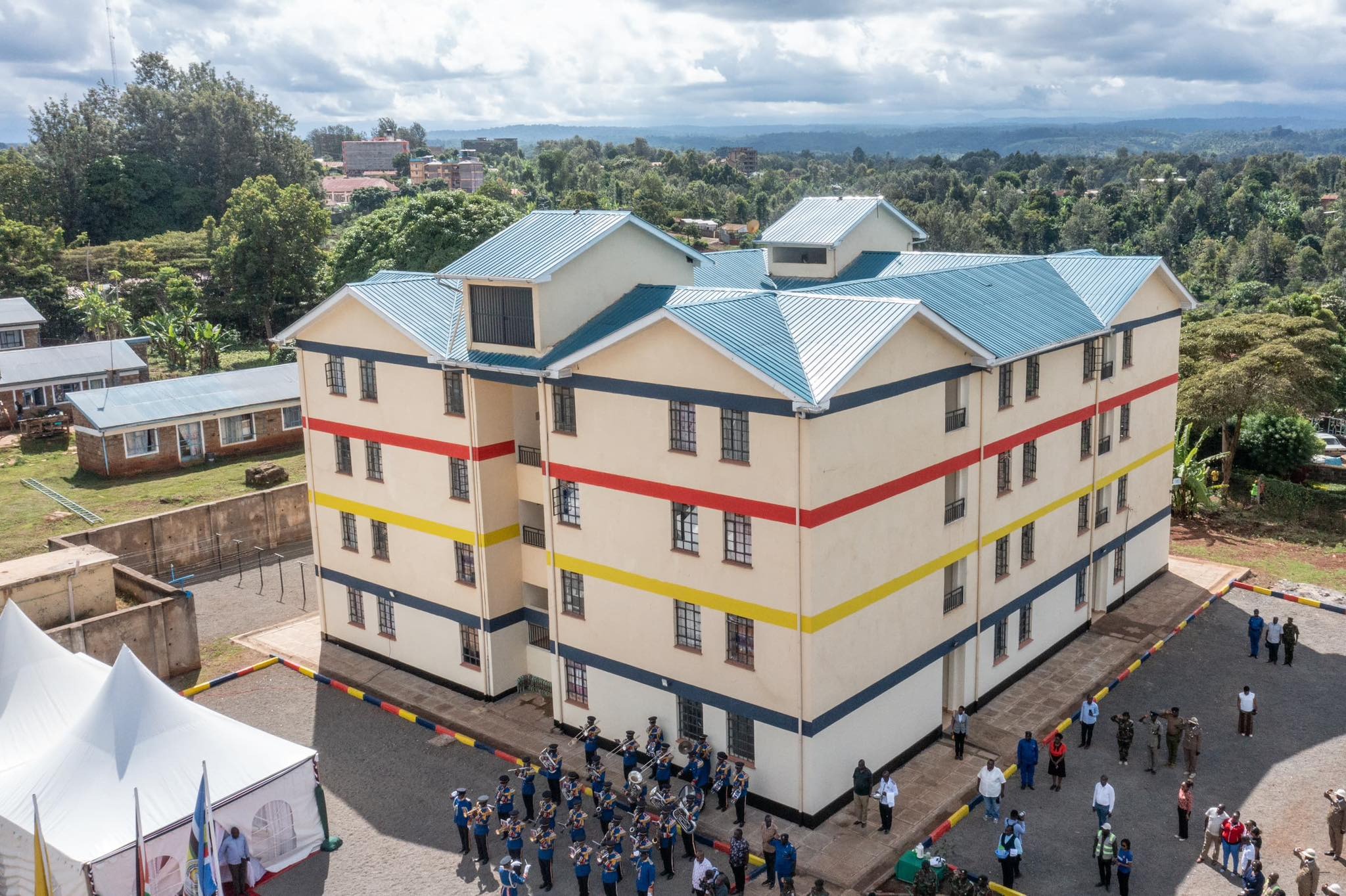
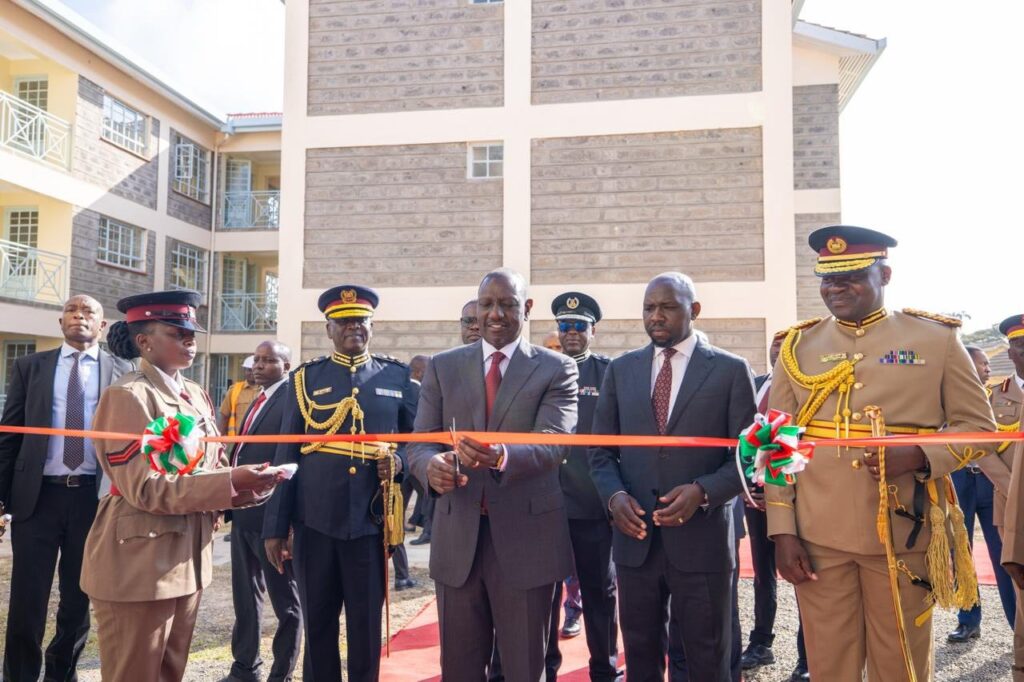
The handover of new police housing units on Monday 1st December 2025, marked a continuation of a deliberate policy shift that President William Ruto has anchored at the heart of his administration. The event stood as a visible reminder of a broader ideological stance that the welfare of police officers is fundamental to national stability, institutional discipline, and service quality. Since taking office, the President has advanced a view that the living environment of an officer directly influences how that officer executes daily assignments, interacts with communities, manages pressure, and upholds the standards expected in a modern law enforcement system. This view has guided a structured housing agenda that is designed to transform the conditions under which officers live, rest, and raise their families.
The State’s approach has been to reposition police housing from a sporadic construction activity to a national investment area governed through formal planning cycles, targeted financing, technical standards, and measurable outcomes. At the beginning of his term, President Ruto instructed that every police station, post, and operational camp undergo detailed accommodation audits. These audits were carried out to establish the true scale of need, the age and state of existing structures, the extent of overcrowding, the cost burden officers were facing in renting houses far from duty stations, and the welfare pressures that had accumulated over years of inadequate investment. The results revealed a difficult housing landscape characterised by deteriorated buildings, limited utilities, and constrained living space for officers and their families. These findings provided the evidence base that shaped the current multi year housing pipeline.
Treasury then developed a funding strategy that anchors police housing within annual national budgets. The current financial year reflects this strategy clearly, with more than KES 4.9 billion directed toward the construction of new housing units and an additional KES 2.5 billion dedicated to ongoing works carried forward from previous cycles. This financing approach provides predictability, reduces interruptions, and allows project teams to plan construction phases with a long term view. It also ensures that the State does not rely on emergency appropriations, enabling a more consistent rollout of units across regions with high operational pressure.
The Monday handover showcased this long term approach. The units delivered belong to a continuous pipeline that runs through several counties where operational intensity, station traffic, community engagement demands, and incident patterns place officers under persistent pressure. Stations in Nairobi, Uasin Gishu, Nakuru, Kajiado, Bungoma, Turkana, Kisumu, and Garissa were among the first to be prioritised because officers in these areas often serve extended shifts, handle large populations, conduct rapid deployment missions, and manage sensitive security incidents. Placing new housing in these zones has been a strategic decision aimed at improving officer readiness and reducing the fatigue associated with long commutes or inadequate rental accommodation.
Each construction site undergoes rigorous preparation. Architectural plans, engineering specifications, costings, and material schedules are examined through multi agency oversight teams drawn from the State Department for Housing, the National Police Service, and technical arms of the Ministry of Lands, Public Works, Housing and Urban Development. The program emphasises compliance with structural integrity standards, water and sanitation provision, energy access, and design layouts that support family stability. Digital tools have been introduced to monitor implementation, track expenditure, capture photographic evidence of progress, and document any variations that arise during construction. These tools reduce wastage, strengthen accountability, and preserve the quality of the final units.
The placement of officers into new units is also governed through structured criteria. Priority is given to officers living in high risk informal settlements, those serving in stations with persistent operational intensity, and those with families who have experienced prolonged welfare strain as a result of inadequate housing. This allocation model ensures that officers in the most constrained environments receive relief first, while the program continues expanding to cover more regions each financial year.
Officers stationed in counties where earlier phases of the housing pipeline were completed have already demonstrated how significant the impact can be. Many report that their living conditions have stabilised, enabling them to focus on duty without the psychological burden of insecure accommodation. Officers with school going children highlight improvements in routine, safety, and consistency. Others highlight the financial relief gained from moving away from high cost rentals, which previously strained their salaries and created unintended vulnerabilities. These testimonies reinforce the policy position that dignified housing strengthens professional conduct, enhances morale, and creates a more predictable policing environment.
The Monday handover therefore represents a continuation of a deliberate public investment agenda rather than a stand alone activity. It is part of a broader administrative philosophy that seeks to elevate police welfare to the same policy tier as mobility infrastructure, equipment modernisation, and operational reforms. The administration views police housing as a foundation upon which discipline, performance, and service integrity can be strengthened. By reducing welfare pressures and improving living standards, the State is cultivating a policing culture built on stability and professional confidence.
Part 2: THE MONEY, THE ARCHITECTURE AND THE SYSTEMS
- Financial Architecture Of The Police Housing Program
- Anchoring police housing in the national budget framework
Police housing has been placed inside the core of the medium term expenditure framework instead of being treated as a peripheral capital item. This means the State plans for police units in three to five year horizons, links them to the macro fiscal outlook, and protects them during annual budget negotiations. Treasury, the Ministry responsible for Housing, and the National Police Service now work with clear annual and multi year targets rather than short term projects that stop and start without warning.
- Dedicated annual envelopes in KES and predictable cash flow
In the current financial year, more than KES 4.9 billion has been directed to new police housing construction, with an additional KES 2.5 billion ring fenced for works already under way. These figures are important for two reasons. First, they signify that police housing has a defined place in the national priorities table. Second, they allow project teams to plan materials, labour and contract timelines with confidence that resources will follow approved work plans rather than arriving irregularly.
- Integration with broader housing and infrastructure investments
The police housing program is aligned with the national affordable housing agenda and the wider infrastructure investment pipeline. This allows the State to leverage common designs, shared contractors, pooled procurement of materials and common supervision structures. In practice, this reduces unit costs, lowers duplication, and creates economies of scale when projects are clustered in the same towns or regions.
- Clear separation between development and recurrent obligations
The financing model carefully distinguishes between capital expenditure on new units and recurrent obligations such as maintenance, utilities, security, and basic estate management. Development budgets fund construction, while recurrent budgets support the ongoing life of the estates. This separation reduces the risk that estates will deteriorate after handover because no funds were set aside for upkeep.
- Institutional Roles And Governance Arrangements
- Presidential policy direction and political accountability
The President sets the strategic direction. He frames police housing as a priority of the administration, convenes the responsible ministries and agencies, and demands periodic reporting. Public events such as the Monday handover serve a double function. They provide visibility for officers and citizens and create clear markers against which delivery can be assessed over time.
- Lead role of the State Department for Housing
The State Department is the technical anchor of the program. It designs the typologies of the houses, prepares the bills of quantities, oversees procurement, and manages contractors. Its officers ensure that structural safety, spacing, sanitation, electricity, water and road access meet standardised specifications so that police estates in different counties are built to comparable quality.
- National Police Service as the welfare and operational client
The National Police Service plays the role of principal client and user. It provides the data that drives planning. This includes accommodation audits, deployment patterns, welfare indicators, and security considerations around each proposed estate. The Service also develops and applies allocation rules, manages occupancy, and receives feedback from officers and families after occupation.
- Multi agency oversight for checks and balances
Implementation is supervised by joint teams that bring together technical officers, planners, finance experts and internal auditors from several institutions. These teams visit sites, validate progress reports, interrogate variations, and certify milestones before payments are processed. This structure limits unilateral decision making and provides internal checks on cost, quality and timelines.
- Project Selection, Prioritisation And Spatial Logic
- Evidence based prioritisation using 2022 accommodation audits
The 2022 audits form the baseline that guides site selection. For each station or camp, the audits captured the number of officers, current housing stock, distance to private rentals, condition of existing units, and basic welfare indicators such as access to water, sanitation and security. This data is used to rank locations and determine which stations receive new units first.
- Focus on high pressure operational environments
Priority has gone to stations in counties where operational intensity is sustained throughout the year. These include urban formations with dense populations, traffic heavy corridors, border points with cross border movement, and rural locations with recurring security incidents. By placing new estates near such stations, the program directly supports rapid deployment and reduces fatigue associated with long commutes.
- Clustering of projects for efficiency and impact
Where possible, housing projects are clustered in the same urban orbit or county. This enables shared access roads, shared utility networks, pooled security fencing and common social amenities such as small playgrounds or community halls. Clustering also makes it easier for supervisors to monitor several projects in a single field visit and provides economies of scale for contractors.
- Balancing junior and senior officers’ needs
The program recognises that junior officers historically faced the highest housing strain. Many estates therefore prioritise one and two bedroom units for junior ranks while retaining a limited number of larger units for officers in supervisory roles. This balance reflects the operational reality of the Service and addresses long standing frustrations about inequity in accommodation.
- Delivery Chain From Design To Handover
- Standardised design templates and adaptable layouts
Projects begin with standard house designs that can be adapted to different sites. The core structure and room sizes are guided by national standards. Architects then adjust the layout to reflect the terrain, available land, and surrounding neighbourhood. This approach preserves consistency in quality while allowing flexibility in estate layout, parking and public spaces.
- Procurement, contractor selection and contract structuring
Contractors are selected through competitive processes that emphasise technical capacity, past performance, financial stability and the ability to deliver within strict timelines. Contracts contain clear clauses on quality benchmarks, completion dates, penalties for delays, and procedures for handling variations. The aim is to ensure that each contractor understands that police housing sites are high sensitivity projects with limited tolerance for underperformance.
- Construction supervision and staged approvals
Project managers carry out routine site inspections. Structural works, roofing, finishing, plumbing, electrical installation and external works are approved at defined stages. Payments are tied to certified milestones, so a contractor can only be paid after independent verification that the work completed matches the drawings and bills of quantities. This staged approach minimises the risk of unfinished buildings consuming the full budget.
- Quality checks before occupation and formal handover
Before officers move in, technical teams conduct final inspections. They test water supply, drainage, lighting, electrical safety, doors and windows, roof integrity, and finishes. Any defects are recorded in snag lists and must be resolved before formal handover. During events such as the Monday ceremony, only units that have passed these checks are presented for occupation.
- Systems For Allocation, Management And Maintenance
- Transparent criteria for allocation of units
Allocation frameworks give preference to officers who work in high risk or high intensity deployments, those with families who have endured prolonged housing stress, and those who previously lived in substandard quarters attached to the station. Lists are prepared by station commanders in consultation with regional and national headquarters, and are subject to review to guard against favouritism.
- Estate management structures within the Service
Once occupied, police estates are managed through designated estate committees or officers who handle day to day issues. They coordinate minor repairs, liaise with utility providers, manage common areas, and enforce basic rules that protect shared spaces. This management layer is vital for preventing rapid deterioration of infrastructure.
- Linking maintenance budgets to real time reporting
The program is gradually integrating digital reporting tools where officers can flag maintenance issues that require attention. These reports support planning for recurrent budgets and ensure that small defects are handled before they become structural problems. This approach safeguards the public investment and preserves dignified living conditions over the life of the buildings.

- Oversight, Accountability And Risk Management
- Internal audit trails and documentation
Each housing project generates a complete file that contains designs, approvals, site visit reports, photographs, payment certificates and variation orders. Internal auditors review these files periodically to verify that the physical works match the financial outlays. This documentation culture creates a traceable record that can be examined at any time.
- Role of Parliament, oversight offices and the public
Parliamentary committees, the Office of the Auditor General and other oversight entities retain the authority to review the program. They examine budget execution reports, visit sites, and interrogate any discrepancies. Public events like the Monday handover also give citizens and the media opportunities to see what has been built in their counties, which supports broader accountability.
- Mitigation of common risks in public construction projects
The program acknowledges common risks such as delayed payments, substandard materials, land disputes and contract disputes. Mitigation measures include prior land verification, clear contract clauses, strong supervision, and regular coordination meetings among all implementing entities. This risk management culture aims to keep projects on schedule and preserve value for money.
DETAILED PROJECTS PORTFOLIO: COMPLETED, UNDERWAY, AND STRATEGIC PRIORITY POLICE HOUSING ESTATES
- Completed and Handed-Over Projects
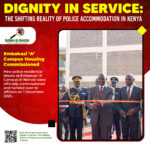
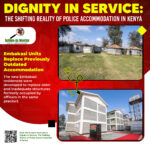
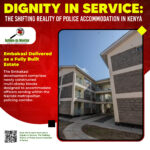
Embakasi ‘A’ Campus Police Housing Estate – Nairobi
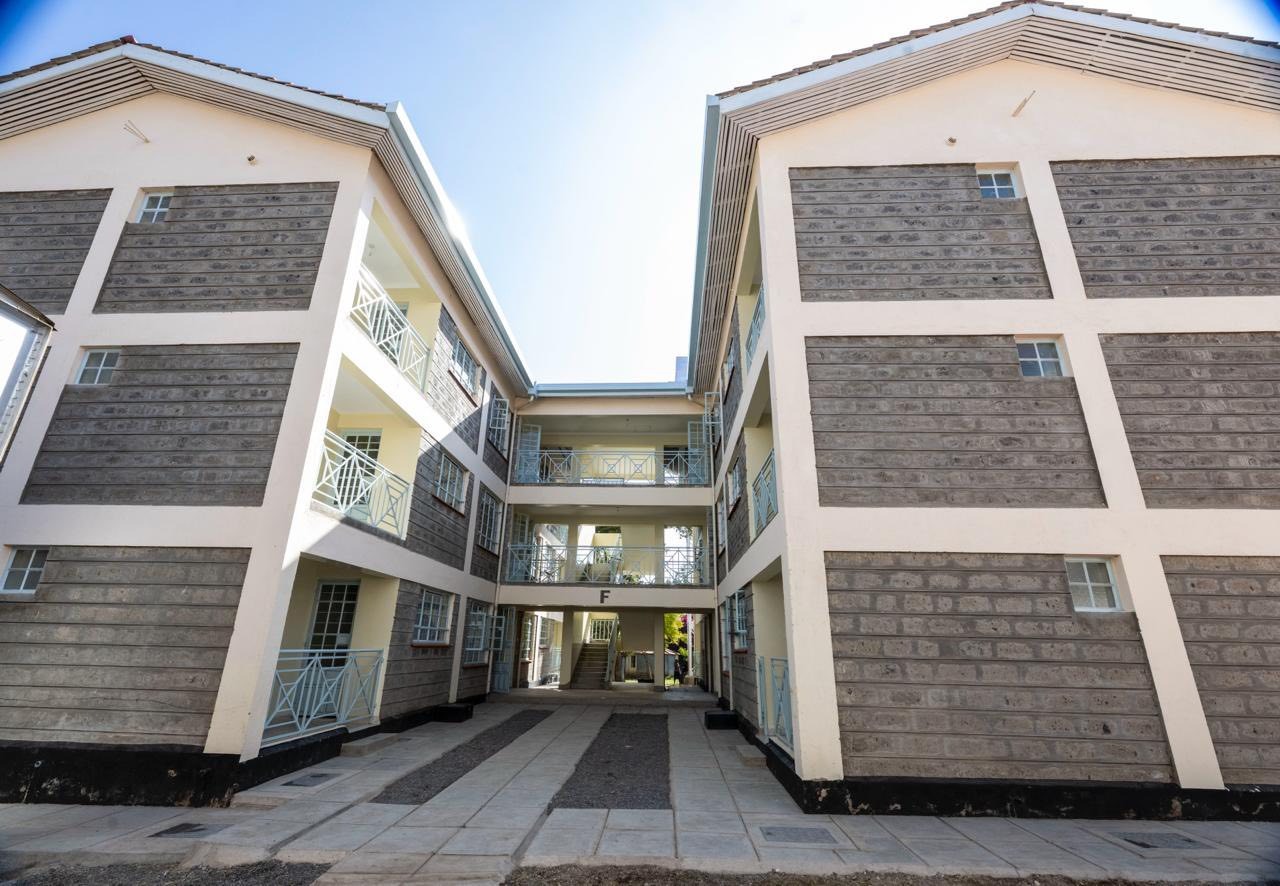
The Embakasi ‘A’ estate is the most visible completed project under the current administration, representing a complete overhaul of the police accommodation landscape within one of Nairobi’s most critical security zones. The newly delivered blocks consist of reinforced concrete apartment structures arranged in multi-storey formations, designed to maximise land efficiency while delivering dignified, safe and durable residential environments for officers. The estate incorporates one-bedroom and two-bedroom units with tiled interiors, pressed-steel doors, well-ventilated cooking areas, ceramic-finished wet rooms and modern electrical fittings calibrated for heavy-duty use. Internally, the apartments are structured to support family living without compromising durability, using moisture-proof wall finishes, impact-resistant floor tiling and energy-efficient lighting.
Externally, Embakasi ‘A’ has been developed as a complete policing residential ecosystem. It includes perimeter walls mounted with security-grade fencing, dual-controlled entry gates, paved internal roads, fire hydrants, strategically mounted lighting masts, waste sorting points, water reticulation systems fed by elevated tanks and borehole integration for redundancy. Within the estate, children’s play courts, drying yards, communal spaces and landscaped courtyards create a balanced environment that supports officers and their families. The estate’s placement within Embakasi is deliberate. Officers stationed near JKIA, the GSU Training School, AP Tactical Units, and major highway corridors now benefit from proximity to their duty points, reducing commuting stress and improving readiness for rapid deployments during emergencies, night rotations or high-risk operations.
582 Completed Units Across Priority Counties
The first batch of completed estates beyond Nairobi comprises 582 units spread across several counties selected through the 2022 audit. These units were constructed to replace structurally compromised colonial-era barracks and improvised rentals in which officers had lived for decades. Each estate adheres to standardised design typologies, using reinforced structural systems, double-coated moisture barriers, non-slip tiled staircases, stabilised foundations suited to regional soil conditions and roof finishes adjusted to local climates. In humid lakeside environments such as Kisumu, roofing incorporates condensation control layers, while in the arid terrains of Turkana and Garissa, heat-resistant insulation and UV-stabilised window fittings are applied.
The county-based estates include integrated utility infrastructure such as lined drainage channels, biodigester or central sewer systems depending on the locality, solar-assisted water heating in select colder counties, and borehole-linked water storage where municipal supply is unreliable. They also incorporate controlled access doors, perimeter lighting, and open courtyards that provide communal security visibility. These estates have already transformed the welfare environment for officers in Nakuru, Kisumu, Uasin Gishu, Kajiado, Bungoma and Garissa by reducing rental burdens, stabilising family life and ensuring officers live within secure compounds that meet occupational safety standards.
- Projects Under Active Construction
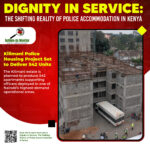
Kilimani Police Housing Estate – 542 Units
The Kilimani estate is a mega-development designed to serve one of Nairobi’s busiest policing belts. The project contains 542 units structured across multiple blocks, each engineered with shear walls, ribbed slabs and load-distributing beams that support the elevation required in a high-value urban environment. Studios, one-bedroom, two-bedroom and three-bedroom units are laid out with an emphasis on privacy, acoustic separation and efficient vertical circulation. Kitchens include laminated cabinetry, durable countertops and mechanical ventilation points. Living spaces are designed for natural lighting and cross-airflow, an essential aspect in Nairobi’s dense metropolitan areas.
At the estate level, Kilimani incorporates an extensive infrastructure backbone. Underground water tanks feed into elevated steel towers to stabilise pressure for multi-storey distribution. Drainage networks are fitted with concrete-lined channels capable of handling high-intensity downpours. Security is enforced through a three-tier access system consisting of outer gates, block-level entrances and internal surveillance-ready corridors. Parking courts are graded and paved to reduce dust interference, while children’s play areas and landscaped communal nodes provide family-friendly zones. The estate’s strategic relevance is evident: Kilimani officers protect diplomatic zones, commercial hubs, residential high-rises and sensitive installations. Housing them within controlled, duty-proximate estates enhances emergency response and reduces fatigue that previously arose from long commutes.
County-Based Estates Nearing Completion
Across Nakuru, Uasin Gishu, Kajiado, Kisumu, Bungoma, Turkana and Garissa, multiple estates are in their final stages of construction. Each estate reflects the unique operational load and environmental constraints of its county. In Nakuru, the focus has been on constructing mid-sized apartment blocks with high-capacity drainage, external fire assembly areas and family accommodation designed to serve officers working in the Rift Valley corridor. In Eldoret, outdated structures have been replaced by modern blocks with reinforced stairwells, upgraded electrical systems and extended compound access roads capable of supporting patrol vehicles.
In Kajiado, where officers frequently operate along dusty, high-temperature routes, estates have been constructed using heat-mitigating wall coatings, UV-resistant window materials and wind-shielding layouts. Kisumu’s estate design responds to lakeside humidity through enhanced ventilation, anti-mould finishing and expanded window sizing. In Turkana and Garissa, the estates contain reinforced perimeter walls, overhead lighting grids, and sand-resistant structural features designed for harsh climatic and security contexts. These details are essential for officers posted in high-risk zones, offering families stability within controlled compounds that remain operational even under difficult environmental conditions.
- Projects Experiencing Implementation Pressure
Starehe Police Housing Estate – 1,710 Units Planned
The Starehe estate is projected to deliver 1,710 units, making it one of the most ambitious public security housing developments in Kenya’s history. The project’s intended design includes multi-block clusters, central courtyards, integrated utility corridors, reinforced parking slabs and security-zoned estate perimeters. However, progress stands at roughly five percent, significantly below the internal milestone curve for a project of this magnitude. The delays have been attributed to material mobilisation issues, land servicing timelines, slow contractor deployment and localised approval processes affecting drainage and utility integration.
Starehe’s strategic relevance cannot be overstated. It sits at the heart of Nairobi’s metropolitan policing grid, covering markets, major transport nodes, industrial corridors and densely populated neighbourhoods requiring constant patrol presence. A functional Starehe estate would relieve severe rental pressures on officers currently living in unstable environments, streamline deployment cycles, reduce fatigue-related errors, and create a stable base for junior officers whose welfare vulnerabilities are heightened in Nairobi’s rental market.
- Technical Standards Across the Entire Housing Program
Across all estates, the program applies a national standard aligned with engineering codes and long-term performance expectations. Structural systems use reinforced concrete frames with shear capacity designed for multi-level habitation. Plumbing incorporates PPR pipework, fully vented soil stacks and calibrated pressure regulators to ensure stable water supply. Electrical installations involve trunked wiring, grounded outlets, lightning protection systems and KPLC-ready meter configurations. Environmental design includes stormwater channels, biodigesters or sewer tie-ins, heat-resistant roofing where necessary and adequate spacing between blocks to create natural ventilation corridors.
Security considerations are embedded into the design, with double-action gates, reinforced boundary walls, CCTV-ready conduits and lighting mast layouts planned to eliminate blind spots. Estates incorporate circulation spaces, fire escape provisions, wide stairwells for safe evacuation, and emergency vehicle access routes.
PART 3: HUMAN IMPACT AND OPERATIONAL EFFECTS OF POLICE HOUSING PROGRAM
Lived Reality For Officers And Their Families
- Stability in daily life and family routines
Access to new housing units has introduced a level of stability that many officers had never experienced in their careers. Regular routines are easier to maintain because officers are no longer shifting from one rental to another based on fluctuating costs. Families can settle, unpack fully, and treat the estate as a long term home rather than a temporary stopgap. Children know where they will sleep, study and play, and spouses can plan household responsibilities around predictable patterns of duty and rest. This stability is becoming a quiet but powerful factor in how officers approach their work each morning.
- Impact on children’s schooling and social development
For officers with school going children, the housing program has removed many of the uncertainties that came with living far from stations or in unstable rental arrangements. Children can attend nearby schools consistently without constant transfers driven by shifting parental postings or rent pressures. Estates that are closer to schools and basic amenities create a safer environment for study, play and socialisation. Teachers report better attendance and concentration when pupils are drawn from households with secure housing, and officers feel less anxiety about their children’s safety while they are on duty.
- Safety and dignity for spouses and dependants
The location and design of police estates have significant implications for the safety and dignity of spouses and dependants. New units with secure perimeters, adequate lighting, defined access routes and functioning utilities create a sense of safety that was lacking in unsecured informal settlements or dilapidated quarters. Spouses are able to move within and around the estate with greater confidence, organise small income generating activities where permitted, and support each other through estate level social networks. This environment reinforces the dignity of police families and reduces the social stigma often attached to poorly housed officers.
Morale, Discipline And Professional Culture
- Shift in attitude toward service and institution
When officers perceive that the State has invested significantly in their welfare, attitudes toward the institution begin to shift. New housing units stand as physical evidence that their concerns have been heard and acted upon. This influences how officers speak about the Service, how they respond to leadership directives, and how they internalise the ethics and values expected of them. Pride in the institution grows when officers feel that their living conditions reflect the seriousness of their mandate.
- Better conditions as a foundation for discipline
Discipline is easier to maintain in an environment where officers have access to adequate rest, privacy and basic comfort. Overcrowded and substandard housing strains tempers, fuels conflict and undermines self control. In contrast, well planned estates allow officers to decompress after difficult shifts, maintain orderly personal routines and prepare for the next assignment with a clear mind. Station commanders report fewer tensions linked to shared accommodation and a more orderly pattern of reporting and turnout where housing standards have improved.
- Reduction of welfare related grievances
Housing has historically featured prominently in welfare complaints within the National Police Service. By addressing this issue through a structured program, the administration has taken one of the most persistent grievances off the table in stations that have received units. Officers in such areas still face operational challenges inherent in policing, but they do so without the added burden of feeling abandoned in their personal living conditions. This reduction in welfare related grievances gives internal dialogue more space to focus on training, performance and professional growth.
Operational Readiness And Deployment Efficiency
- Proximity between home and duty station
New estates are deliberately placed within close reach of stations and operational bases. This proximity improves readiness by shortening the time between call up and deployment. Officers can report for duty quickly during emergencies, attend briefings on time and respond to incidents without the delays associated with long commutes. For commanders, this proximity translates into greater confidence that teams can be mobilised rapidly during peak demand or unexpected security events.
- Reduced fatigue and improved alertness during shifts
Long, stressful commutes from distant or congested residential areas add hidden fatigue to already demanding patrol and response duties. Housing that is close to stations reduces this burden significantly. Officers arrive at work less exhausted and can use off duty hours for genuine rest, family engagement or personal development. This improves alertness during shifts, sharpens judgment in high pressure situations and contributes to safer operations for officers and the public.
- More predictable deployment planning for commanders
When commanders know that their officers live in secure and organised estates near the station, deployment planning becomes more precise. Duty rosters, night shifts, special operations and rapid response teams can be scheduled with realistic assumptions about availability and reporting times. This predictability improves the quality of planning and reduces disruptions that stem from officers struggling with transport or rental challenges.
Community Perception, Trust And Public Confidence
- Visible commitment to police welfare in local communities
The presence of new police estates sends a clear signal to local communities that the State is investing in the welfare of officers who serve them daily. Residents see modern units rising in their own counties and link these developments to the wider question of how seriously the government treats security. This visibility helps to counter narratives that portray police officers as neglected or unsupported and reinforces the idea that officers are a valued part of the national workforce.
- Improved officer conduct and community engagement
Officers whose basic welfare needs are addressed tend to approach community interactions with a different level of composure. When housing stress eases, there is more emotional bandwidth for patient engagement, conflict de escalation and respectful treatment of citizens. Communities pick up these changes gradually through daily encounters at stations, on patrols, and during public meetings. Over time, improved conduct linked to better welfare supports a more constructive relationship between officers and residents.
- Neighbourhood security and integration around police estates
Well managed police estates act as stabilising anchors in local neighbourhoods. Their presence discourages some forms of criminal activity in the immediate vicinity and can provide a sense of safety for surrounding communities. When estates integrate carefully with nearby schools, trade centres and residential zones, they promote mutual familiarity. Residents know officers as neighbours as well as law enforcers, and officers understand local dynamics more intimately because they live among the people they serve.
Retention, Career Choices And Institutional Stability
- Housing as a factor in retention decisions
Decisions by officers to remain in service, seek transfers, or exit early are influenced by a combination of pay, working conditions and welfare support. Decent housing has become part of that equation. Officers who secure places in new estates are more likely to view the institution as a stable career path with tangible benefits. This supports retention of experienced officers who carry valuable knowledge of local crime patterns, community networks and operational terrain.
- Attractiveness of policing as a career for younger generations
Younger Kenyans considering careers in the security sector often rely on visible signals about how the State treats its officers. Modern housing estates, clean compounds and stable family environments for serving officers communicate that the profession is being modernised. This strengthens recruitment messaging and can attract candidates who might otherwise have been dissuaded by stories of harsh living conditions and welfare neglect.
- Internal cohesion and loyalty to the Service
When officers perceive that welfare policies are being implemented fairly and consistently, internal cohesion increases. Housing allocations conducted transparently reinforce a sense of fairness and reduce perceptions of bias. Officers begin to identify more strongly with the Service as a collective community rather than as isolated individuals competing for scarce resources. This cohesion supports loyalty to the institution and resilience in the face of operational risks.
Gender, Inclusion And Sensitive Welfare Dimensions
- Supporting women officers and their families
Women officers carry both operational responsibilities and, in many cases, family care duties. Secure, well planned housing estates make it easier to manage these dual roles. Safe spaces for children, reliable lighting, proper sanitation and clear estate rules contribute to a more supportive environment. Women officers can plan duty schedules and childcare with greater confidence, knowing that their families remain in secure surroundings while they serve.
- Addressing vulnerabilities in previous informal arrangements
Before the rollout of new estates, many officers and their families lived in informal settlements or improvised quarters near stations. These environments exposed them to crime, health hazards and unpredictable landlord behaviour. The new estates substantially reduce such vulnerabilities by introducing clear tenure arrangements, controlled access and basic infrastructure. Officers and dependants previously exposed to frequent evictions or harassment gain a more protected living environment.
- Space for psychosocial wellbeing and peer support
Organised estates create opportunities for informal peer support networks to emerge among officers and their families. Shared spaces allow neighbours to look out for each other, discuss challenges and share coping strategies. This has subtle but important effects on psychosocial wellbeing. Officers who feel that their families are part of a supportive community experience reduced stress and approach duty with greater psychological balance.
Emerging Lessons And Field Signals For The Future
- Evidence that welfare investments alter service culture
Field experience from the estates already in use suggests that welfare investments can shift service culture over time. As officers settle into decent housing, their expectations about institutional standards rise. They demand better equipment, training and management with a confidence grounded in the knowledge that the State has already demonstrated commitment in one critical area. This can be harnessed positively to drive wider reforms.
- Need to sustain maintenance and avoid deterioration cycles
A key lesson from previous eras of public housing is that construction alone is not enough. The current program is already surfacing the importance of sustained maintenance funding, responsive repair systems and clear estate management rules. Without these, even well built units can decline. The administration is therefore under continuous pressure to pair construction with long term estate management planning that safeguards the original investment.
- Opportunity to embed data driven management into police welfare
The housing program is generating valuable data on occupancy, estate performance, maintenance needs and officer feedback. If this data is consolidated and analysed properly, it can inform future welfare decisions beyond housing. Lessons from which estates perform best, which designs work in certain climates, and which locations yield the greatest morale gains can guide the next cycle of investments in health, transport, equipment and training.
PART 4: GAPS, PRESSURES AND THE WORK THAT STILL LIES AHEAD FOR THE POLICE HOUSING PROGRAM
Scale of Demand Versus Units Delivered
- The national housing deficit inside the Police Service remains substantial
Even with the progressing pipeline, the number of officers in need of dignified housing is far greater than the current supply. Accommodation audits continue to show thousands of officers living in outdated blocks, improvised structures, or private rentals far from duty stations. The handovers conducted under President Ruto’s tenure mark real progress but also expose the magnitude of what remains. Every completed estate demonstrates success while simultaneously highlighting areas still waiting in the queue.
- Growing population within the Service intensifies pressure for expansion
Recruitment cycles that expand police numbers for national security reasons also expand housing demand. Each new cohort entering the Service increases the pressure on existing units and accelerates the need for future construction. The program must therefore evolve in a way that anticipates population changes and links construction output to projected growth in deployments.
- High demand in urban centres presents unique spatial challenges
Urban counties such as Nairobi, Mombasa, Nakuru and Kisumu have large officer populations and intense operational loads. However, land availability in these cities is constrained and expensive. The program faces the challenge of securing strategically located parcels that allow officers to live near stations without driving costs beyond budget thresholds. These spatial realities require careful planning to avoid delays and ensure sustainable estate designs.
Maintenance Burden And Estate Sustainability
- Maintenance systems need to match the pace of new construction
New estates introduce maintenance obligations that require budgets, personnel and systems. Without organised maintenance structures, estates can deteriorate quickly. Plumbing wear, electrical faults, broken fixtures and drainage issues must be handled promptly to preserve living standards. The program is under constant pressure to balance construction budgets with recurrent funds that sustain infrastructure over time.
- The need for professional estate management capacity
Estate management within the Police Service relies heavily on designated officers who take on additional responsibilities. As the number of estates grows, the need for structured estate management training becomes clear. Officers who manage estates require knowledge in facility coordination, vendor engagement, reporting tools and community relations within the estate. Building this capacity will be essential to prevent operational gaps.
- Risks of overcrowding if allocation rules are not consistently applied
High demand creates a risk that some estates may experience overcrowding if allocation governance weakens. Transparent criteria and strict enforcement reduce this risk. Estates must remain orderly to sustain dignity and functionality, which requires close monitoring from local and national headquarters.
Procurement, Contractor Performance And Delivery Risks
- Contractor performance remains a sensitive variable
While many contractors perform well, some projects may face delays due to contractor capacity, supply chain constraints or disputes over variations. The program must manage these scenarios carefully to protect timelines and budgets. This requires strong contract enforcement, consistent supervision and readiness to replace underperforming contractors when necessary.
- Procurement cycles can slow project momentum
The time required to complete procurement procedures, especially in high value construction, can slow start dates for new projects. Documentation, evaluations, negotiations and approvals must follow legal frameworks, which introduce inevitable timelines. Streamlining internal processes without compromising accountability will help maintain steady momentum for future phases.
- Market volatility affects material availability and cost stability
The cost of steel, cement, fittings and labour can shift unpredictably. Volatility increases pressure on project budgets and can trigger contract variations. Effective financial planning requires anticipating these shifts and integrating buffers so that construction continues without compromising quality.
Land, Approvals And Local Coordination
- Securing appropriate land parcels requires extensive coordination
Land identification involves ministries, police leadership, counties, surveyors and the communities around proposed sites. Negotiations must consider long term access, infrastructure connections, environmental conditions and security factors. Delays in land approvals can slow entire project clusters, creating backlogs in counties with urgent accommodation needs.
- County government collaboration remains a decisive factor
Many estates depend on counties for road access, drainage solutions, waste management support and connection to utilities. Counties with efficient planning systems enable faster estate development, while those with slow approval processes or strained utility networks can inadvertently delay housing projects. Strengthening county national collaboration is essential for program continuity.
- Community relations around construction sites influence smooth delivery
In some locations, communities raise concerns about access roads, noise, fencing or perceived changes to their neighbourhoods. Addressing these concerns early through structured engagement prevents conflict and supports smoother construction. Establishing predictable communication channels between project teams and local residents is becoming an important part of project management.
Expectations From Officers And Citizens
- Rising expectations require consistent communication and delivery
As more units are handed over, officers across the country increasingly expect similar upgrades in their own stations. These expectations are legitimate and reflect years of difficult living conditions. Meeting them requires realistic communication about timelines, budget constraints and sequencing logic. The Service must balance hope with accuracy to avoid disillusionment.
- Communities expect visible returns from security investments
Citizens who observe new police estates expect improved service delivery, faster emergency responses and stronger community engagement. Their expectations create pressure for officers to perform in ways that reflect the improved welfare conditions. The Service is therefore challenged to translate better living standards into better public outcomes, reinforcing the link between investment and performance.
- The handover events themselves create public markers for accountability
Every housing handover becomes a reference point for citizens and officers. These events set expectations for what should happen next in other counties. Handovers are therefore both achievements and commitments that compel the program to advance without significant slowdown.
Institutional Capacity, Governance And Long Term Sustainability
- Strengthening internal welfare planning capabilities
Welfare planning must become a distinct professional function within the National Police Service. Officers require training in welfare analysis, needs assessment, data interpretation and policy support. Strengthening this internal capacity will improve how future housing phases are designed and ensure that welfare investments align with operational realities on the ground.
- Digitisation of housing records and allocation systems
Digital systems for tracking occupancy, maintenance requests, estate histories and officer mobility are essential for long term efficiency. Without digitisation, estate management becomes vulnerable to errors, favoritism, and data loss. The program is moving toward digital integration, but full rollout requires investment, training and institutional adaptation.
- Aligning estate development with broader security sector reforms
Housing cannot stand alone. It interacts with training reforms, equipment modernization, station upgrades, community policing strategies and officer wellbeing programs. Sustaining the value of the housing investment requires alignment across these domains. Estates must form part of a wider institutional posture that strengthens the entire policing ecosystem.
Continuity Across Administrations
- A national program of this scale requires political stability
The police housing agenda is a long term investment that spans years and political cycles. Stability in policy direction ensures that future phases are funded and implemented without disruption. The success of the program under President Ruto’s leadership demonstrates the impact of clear political support. Future administrations will need to uphold this commitment to preserve momentum.
- Institutionalising the program reduces vulnerability to change
By embedding housing within formal frameworks, multi year budgets, standard designs and national planning documents, the program becomes harder to dismantle or deprioritise. Institutionalisation ensures that officers in counties still waiting for their estates are protected from political shifts that could undermine continuity.
Defining Success Over The Long Term
- Success is measured by consistency, coverage and functionality
The long term success of the housing program depends on how consistently new units are delivered, how widely the estates reach across counties, and how well they function over time. Achieving this requires unwavering commitment to quality, supervision, maintenance and planning.
- The true measure lies in improved policing outcomes
While dignified housing improves welfare, its ultimate value lies in enhanced service delivery. Better living conditions must translate into sharper readiness, more constructive community engagement, reduced corruption vulnerabilities and stronger institutional pride.
- Success also includes public trust in the State’s stewardship of security
Citizens observe how the government treats its police officers. Housing is a visible symbol of that relationship. When the State invests in those who protect the nation, it builds public confidence in both the institution and the administration steering the reforms.
CONCLUSION: A LONG-TERM SECURITY INVESTMENT ROOTED IN DIGNITY, SYSTEMS AND NATIONAL STABILITY
The police housing program championed by President William Ruto has emerged as a structural pillar in the transformation of Kenya’s security ecosystem. What began as a welfare intervention has matured into a nationwide infrastructure agenda with clear financial anchoring, defined technical standards, institutional accountability and a delivery pipeline that now spans urban, peri-urban and rural operational zones. The estates completed to date, including the recently handed-over Embakasi ‘A’ Campus, demonstrate the practical value of a State that recognises the connection between dignified living conditions and the professional demands placed on officers.
Across the country, the developments taking shape signal a decisive shift away from improvised accommodation toward a disciplined, data-driven, multi-year housing framework aligned to the operational realities of policing. The administration has embedded police housing within the national budget cycle, established multi-agency oversight systems, implemented design uniformity, and invested in estate-level infrastructure capable of supporting officers and their families. These interventions anchor welfare in a space that supports readiness, discipline and service pride. Officers posted in Nairobi’s metropolitan commands, the Rift Valley corridor, border-sensitive counties and high-temperature northern regions now have a realistic path toward dignified accommodation that protects their wellbeing and strengthens their contribution to national stability.
The long-term implications of this investment are significant. Officers who live in safe, predictable environments report greater morale, improved mental balance, stronger family coherence and a higher capacity for community engagement. Commanders gain operational predictability because officers report for duty from secure, proximate estates rather than unstable rental locations. Communities benefit from more consistent policing outcomes, strengthened public confidence and visible demonstration that the State is committed to supporting those who serve on the front lines.
The program also exposes the scale of work ahead. Demand outstrips supply, urban land constraints complicate expansion, maintenance systems must be strengthened, and large estates such as Starehe require accelerated progress to meet strategic expectations. Yet the program’s architecture provides a roadmap for sustained delivery. The financial frameworks, institutional structures and engineering standards already in place ensure that every completed estate adds to a growing base of national security infrastructure.
The future of the police housing program now depends on unwavering commitment, steady financing, technical discipline and continuity across planning cycles. If sustained with the same resolve that underpinned the first phases, Kenya will build a policing welfare ecosystem capable of supporting a modern security service for decades. For officers on the ground, for families who depend on them and for communities that rely on their presence, these estates represent a clear message that the Republic values its protectors, safeguards their dignity and invests in the conditions that allow them to serve with confidence, resilience and honour.